
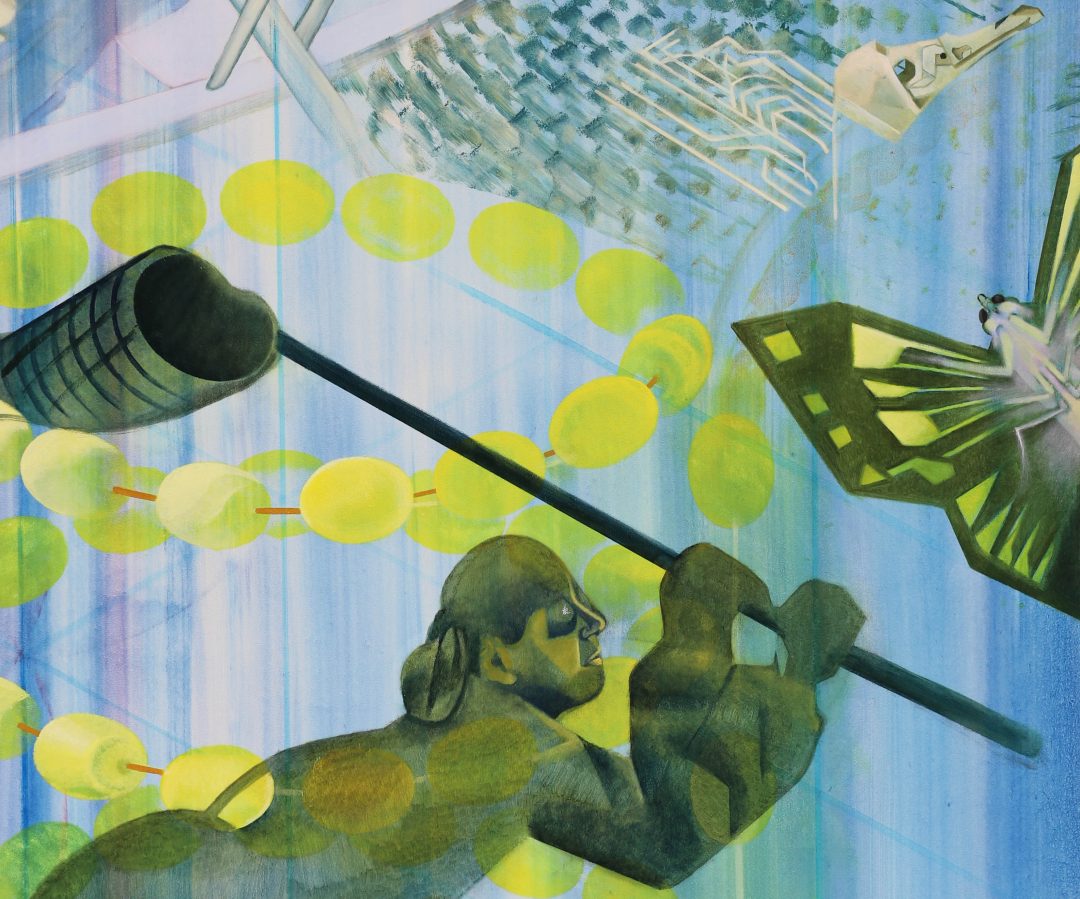
The Lies (detail) 2026
Pigment, binder, acrylic and oil on polyester
150 x 110 cm
This exhibition was funded by CREATE NSW.
MADELEINE KELLY
The First Killing of a Butterfly
Even before you enter, you can see the first pair of wings. The deconstructed birds from the painting Butcher Bird (2026) guide you into the space, while the outline of a mounted butterfly rises up to the side. The title of the exhibition, The First Killing of a Butterfly, sets the tone.
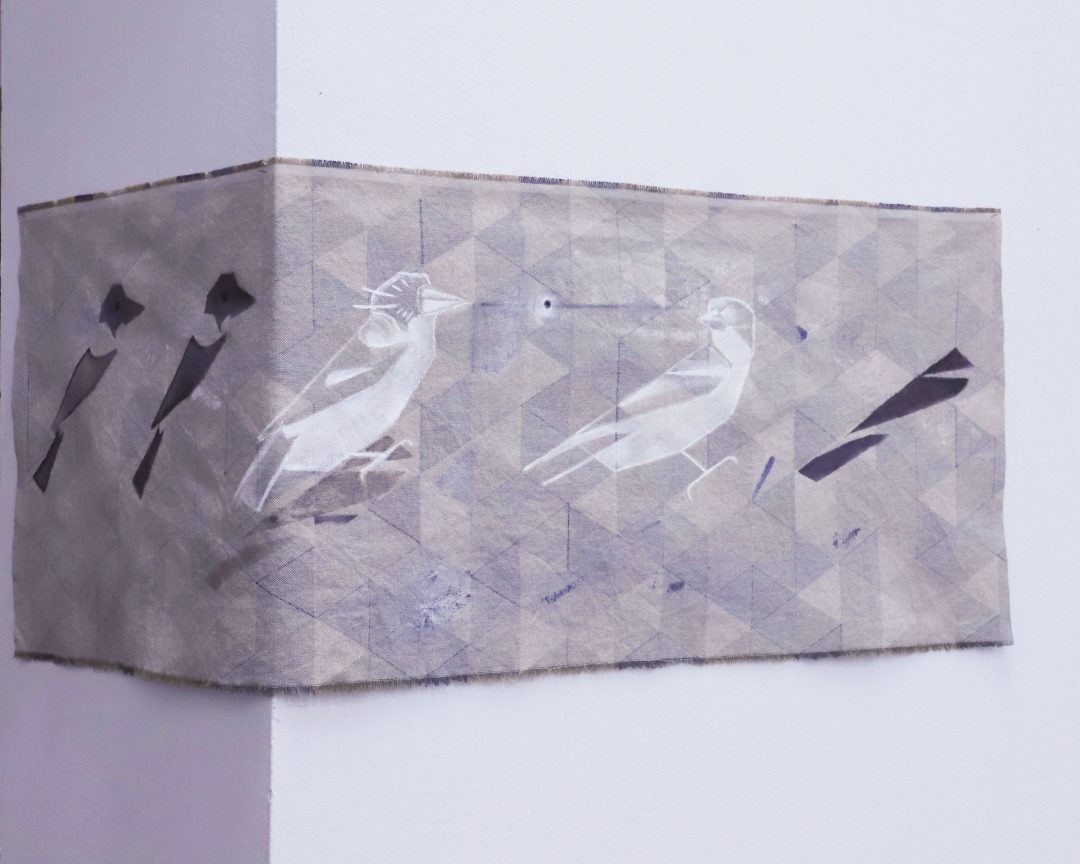
Butcher Bird 2026
Acrylic on cotton
30 x 100 cm
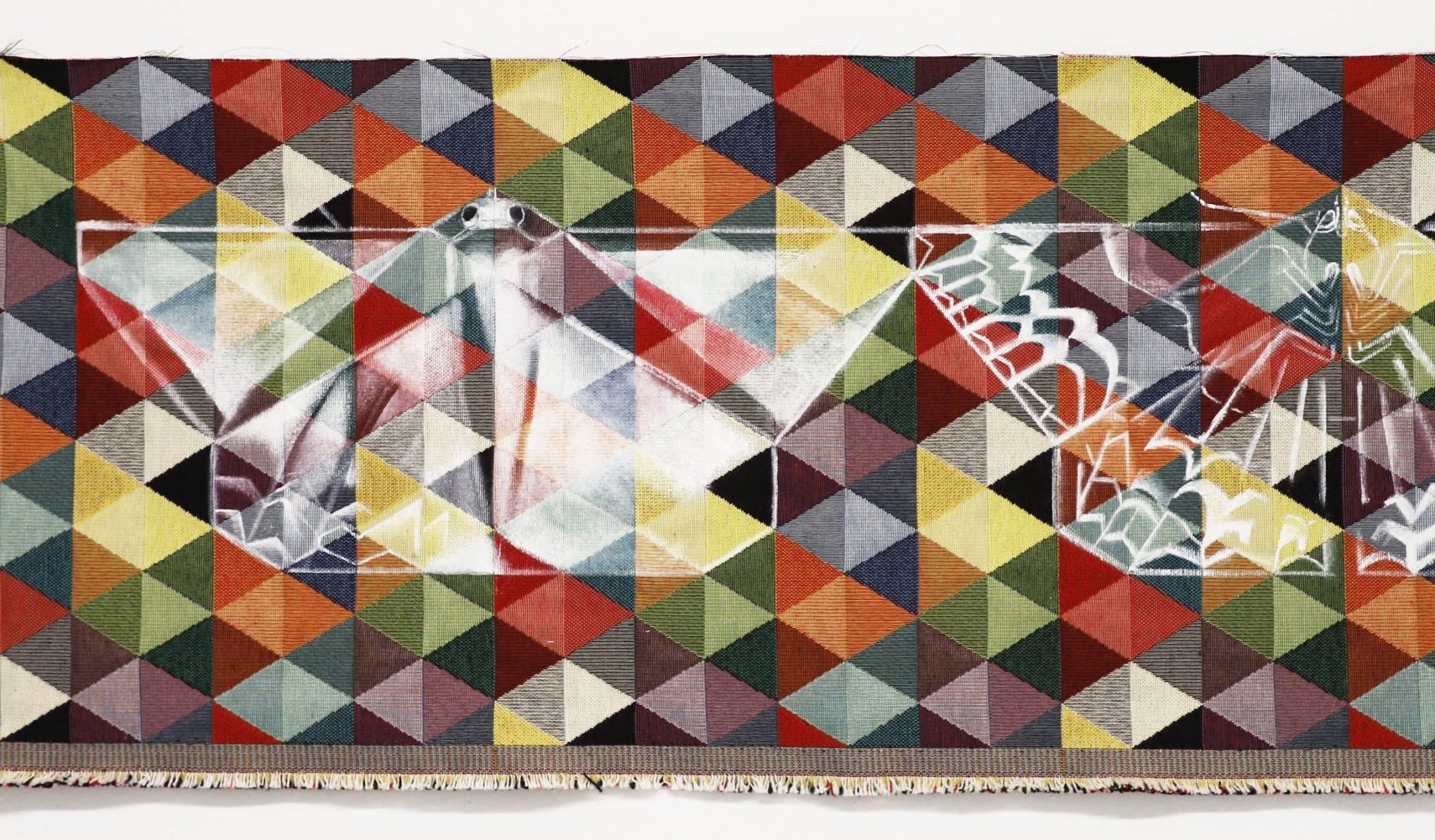
The Killing of the First Beautiful Butterfly 2026
Acrylic on cotton
38 x 100 cm
Next, the eye is caught by a book, Amalie Dietrich: Ein Leben. This biography, which examines the difficult legacy of the nineteenth-century German naturalist, is the starting point of the works shown here.
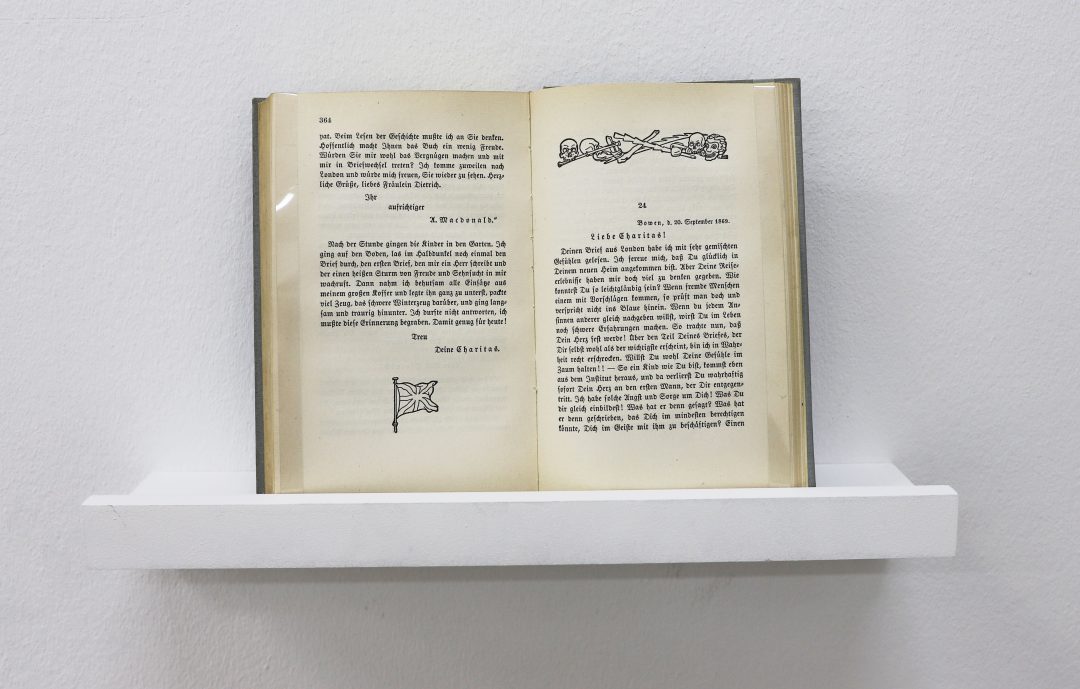
Book: Bischoff, Charitas. Amalie Dietrich: Ein Leben. Berlin: Grote, 1927.
Madeleine Kelly focuses on the birds that Amalie Dietrich “collected” in Australia between 1863 and 1873.
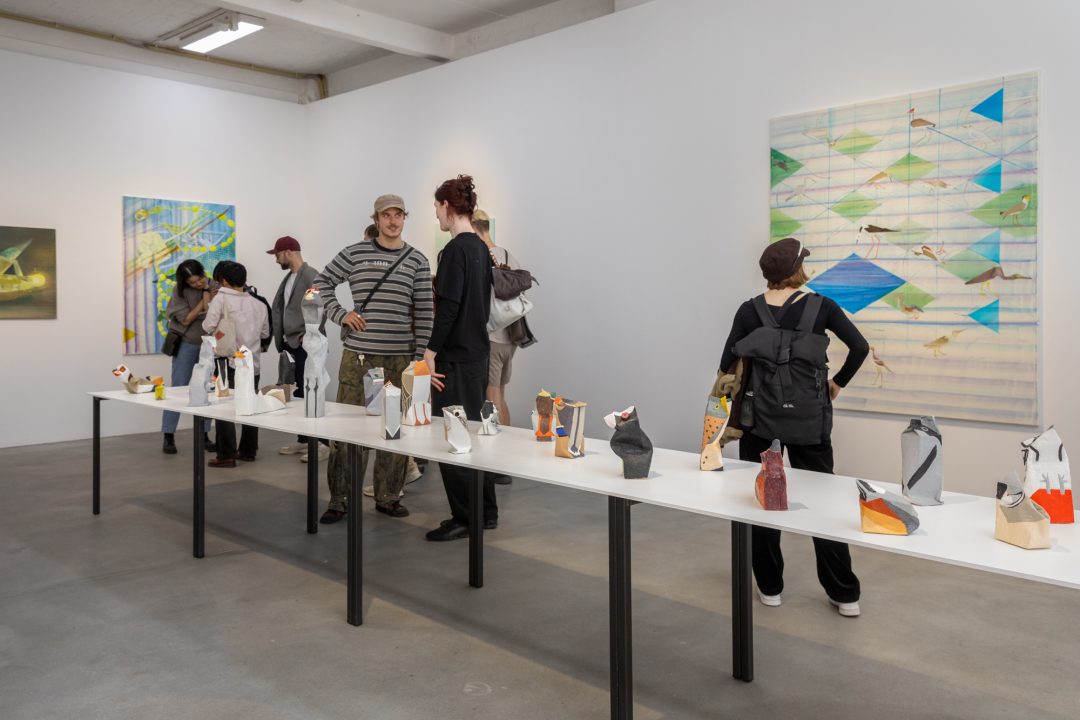
The Australian artist’s painting Bird Trap Line (2026) reminds us that this act of collection was always one of violent capture. Arranging them on delicate lines, she brings back to life the waterbirds who are now preserved specimens in the collections of the Natural History Museum Bamberg. By doing so, she creates a tension between strictly geometrical order and the imperfections of the natural world.
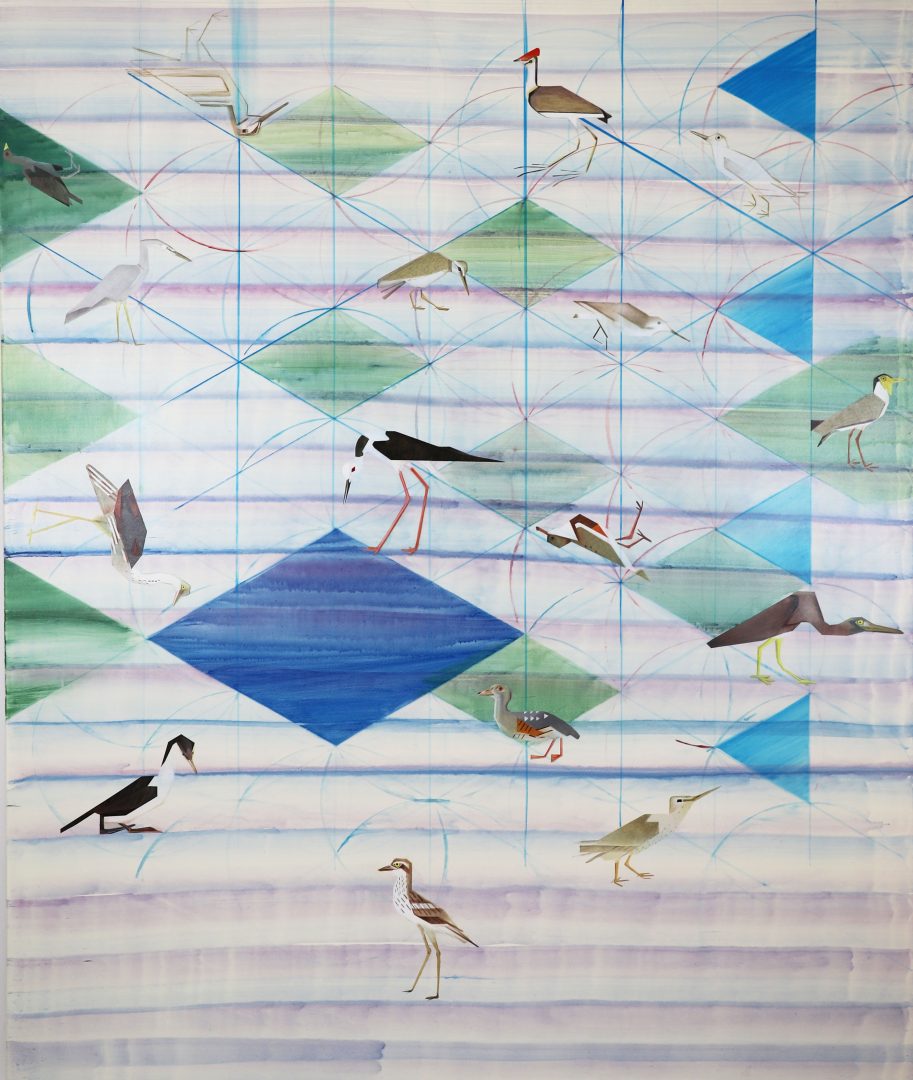
Bird Trap Line 2026
Pigment, binder and oil paint on polyester
185 x 155 cm
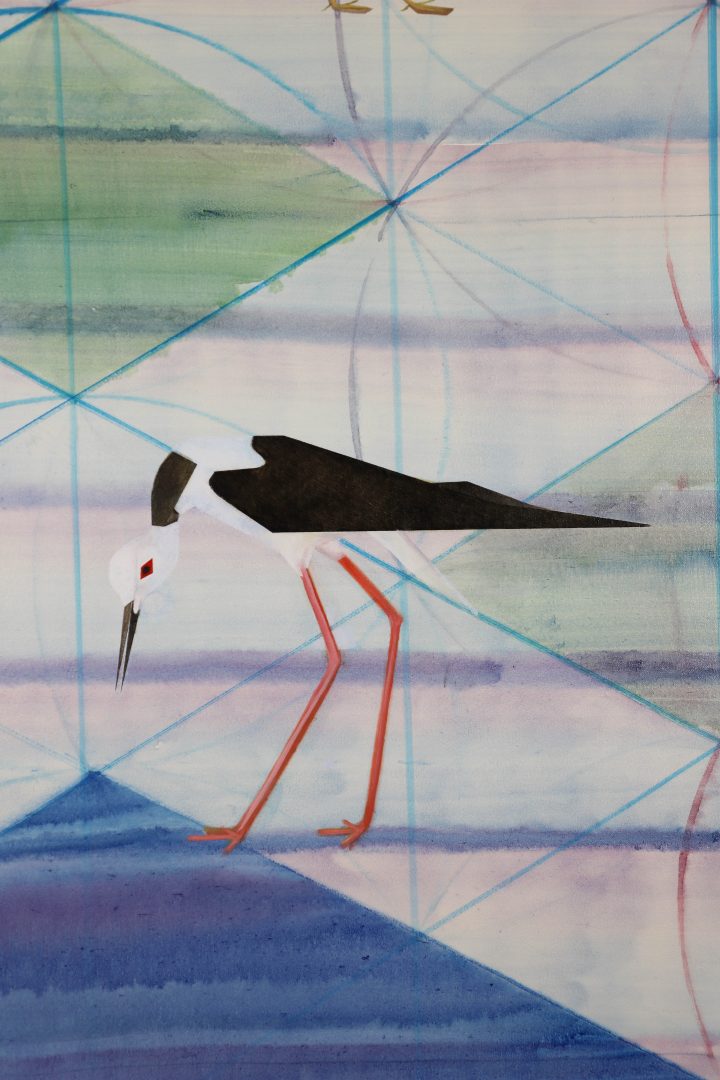
Bird Trap Line (detail) 2026
Pigment, binder and oil paint on polyester
185 x 155 cm
This is also apparent in Madeleine Kelly’s Rainbow Lorikeet (2026). The outlines of this bird’s vertebrae in the collection of the Museum of Natural History Berlin are precisely painted, causing the deviations from grid’s exact circles to stand out all the more. The large-format painting introduces viewers to the aesthetic contrast between fragility and semiotic density that is typical of Madeleine Kelly’s colourful works.
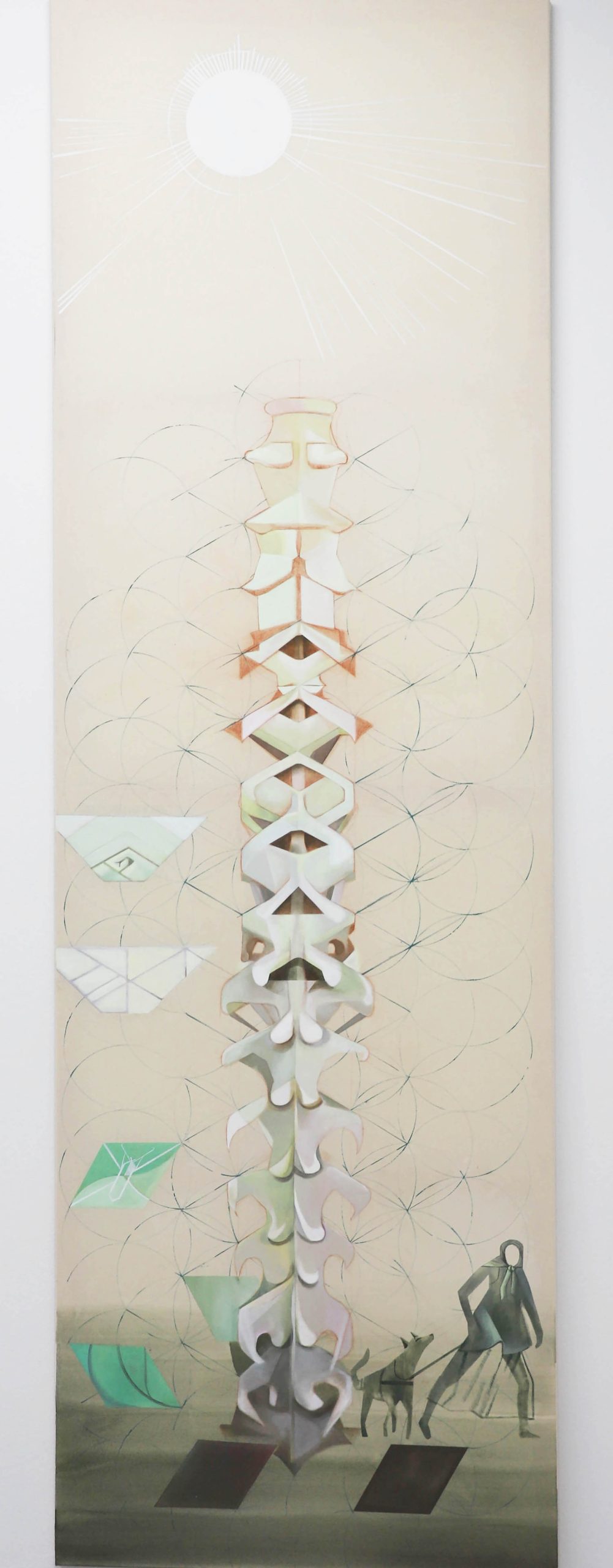
Rainbow Lorikeet 2026
Acrylic on canvas
300 x 95 cm
A symbolically charged scene emerges in Lighting Treasures (2026), in which Amalie Dietrich’s botanical legacy turns into enigmatic emblems, as Acacia dietrichiana and Bonamia dietrichiana can only be discerned schematically. Like all finds, they were classified according to European methods and thus incorporated into a colonial system of knowledge.
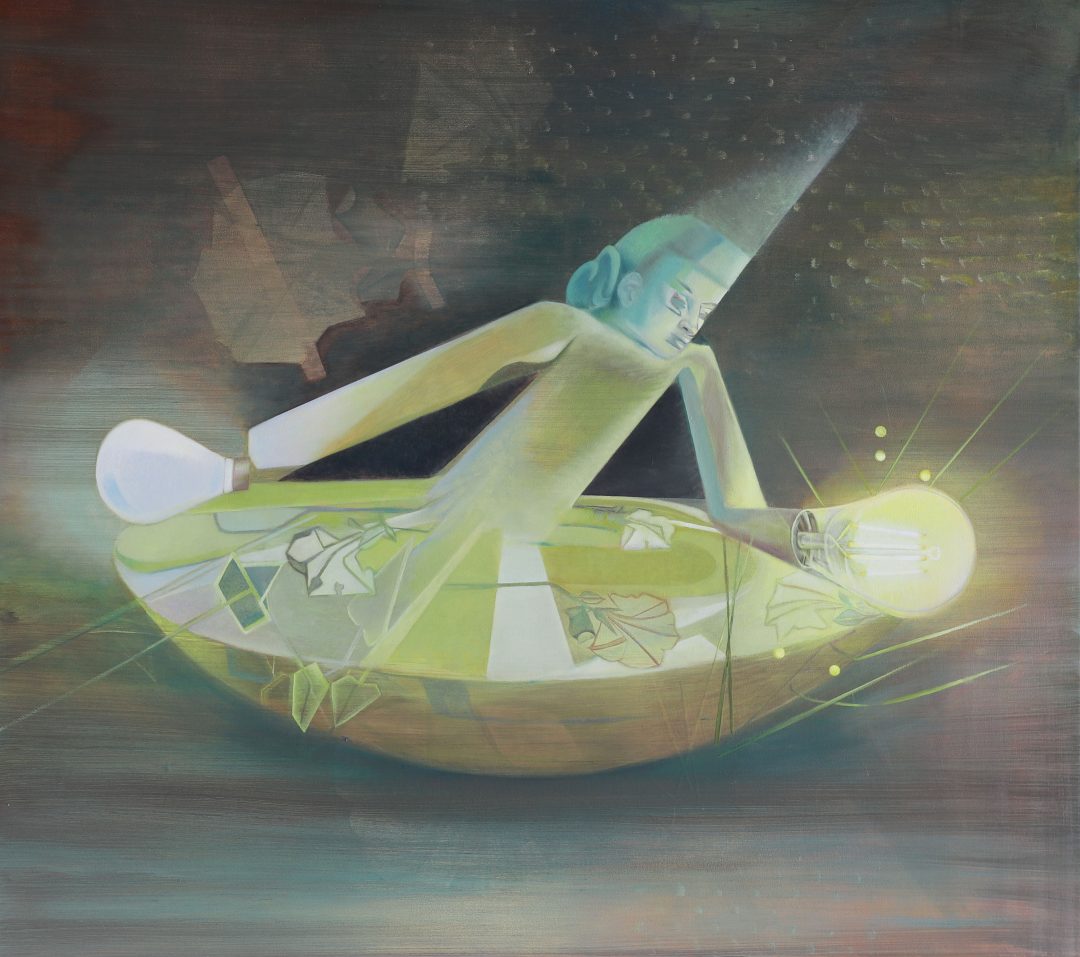
Lighting Treasures (Acacia dietrichiana and Bonamia dietrichiana) 2026
Oil and acrylic on polyester
80 cm x 90 cm
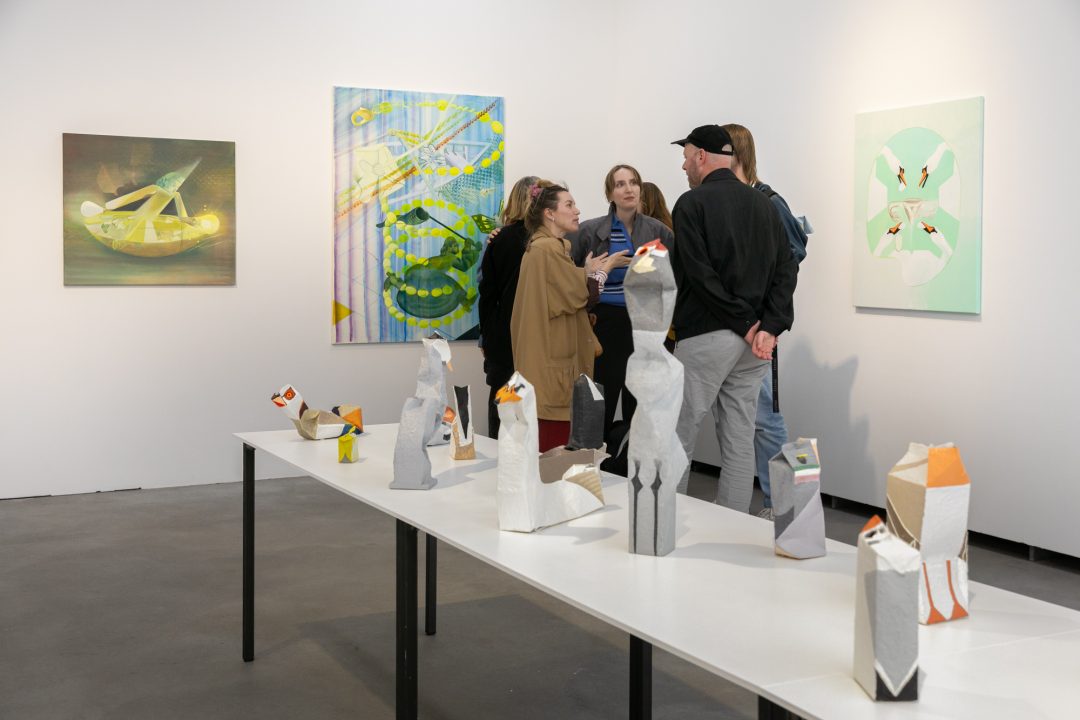
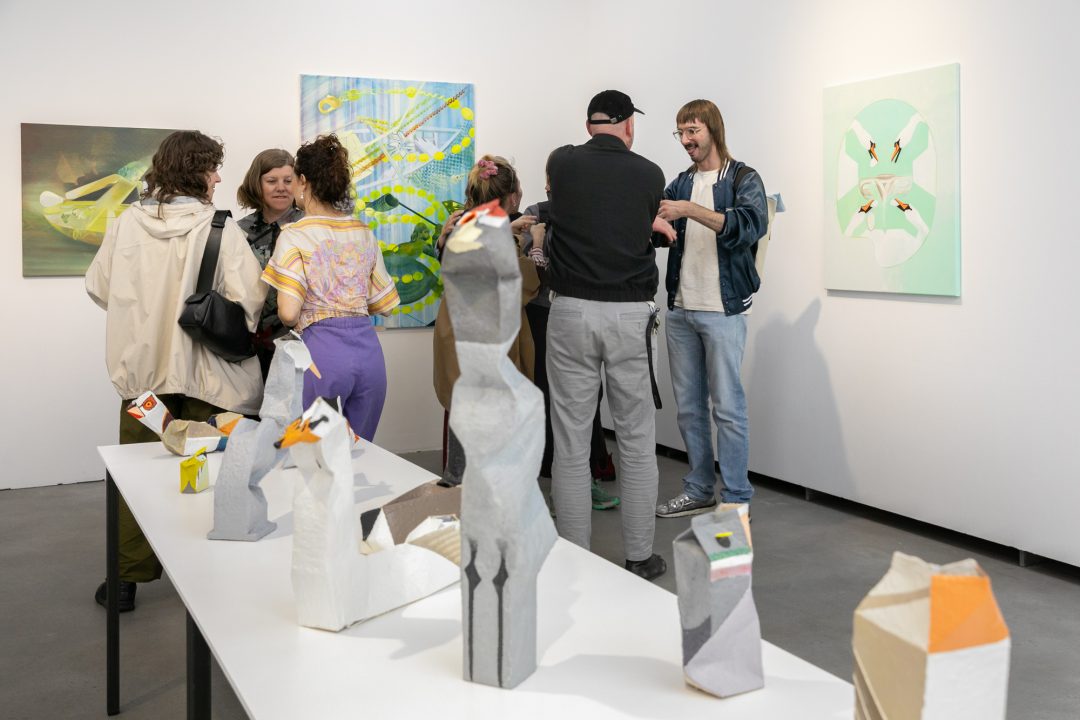
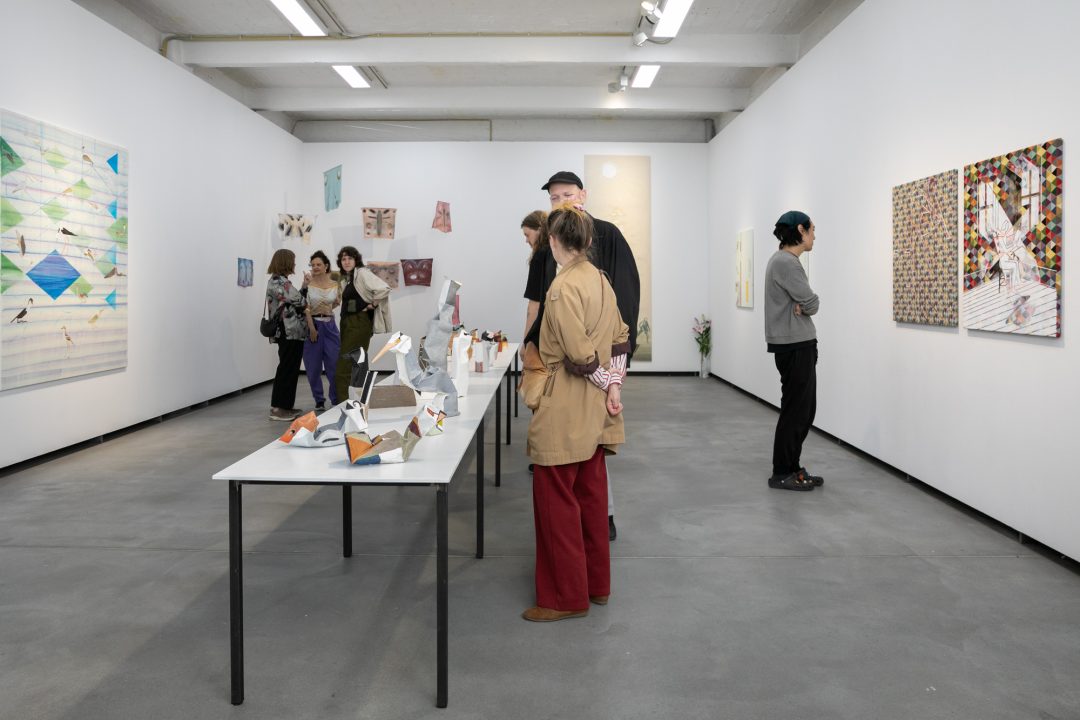
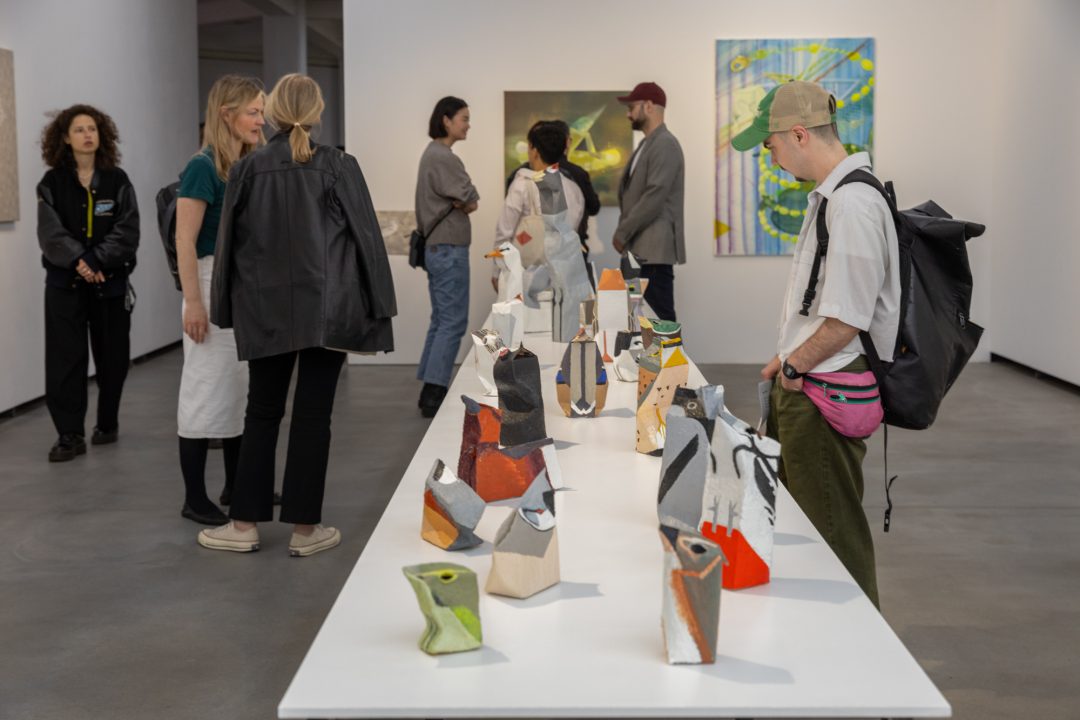
The exact identification of species also plays an essential role in Madeleine Kelly’s artistic process. Meticulous research and a deep understanding of her pictorial motifs form the basis of her work. This is evident in her ongoing series Grey Heron and Waterfowl Kin (2026), which originated during her year-long stay in Berlin. A flock of colourful bird sculptures lure us deeper into the exhibition space, inviting us to step forward and take a closer look. Layer upon layer of coloured wax on recycled drink cartons has resulted in almost playful portrayals of Berlin waterbirds, visualizing the coexistence of nature and human consumption.
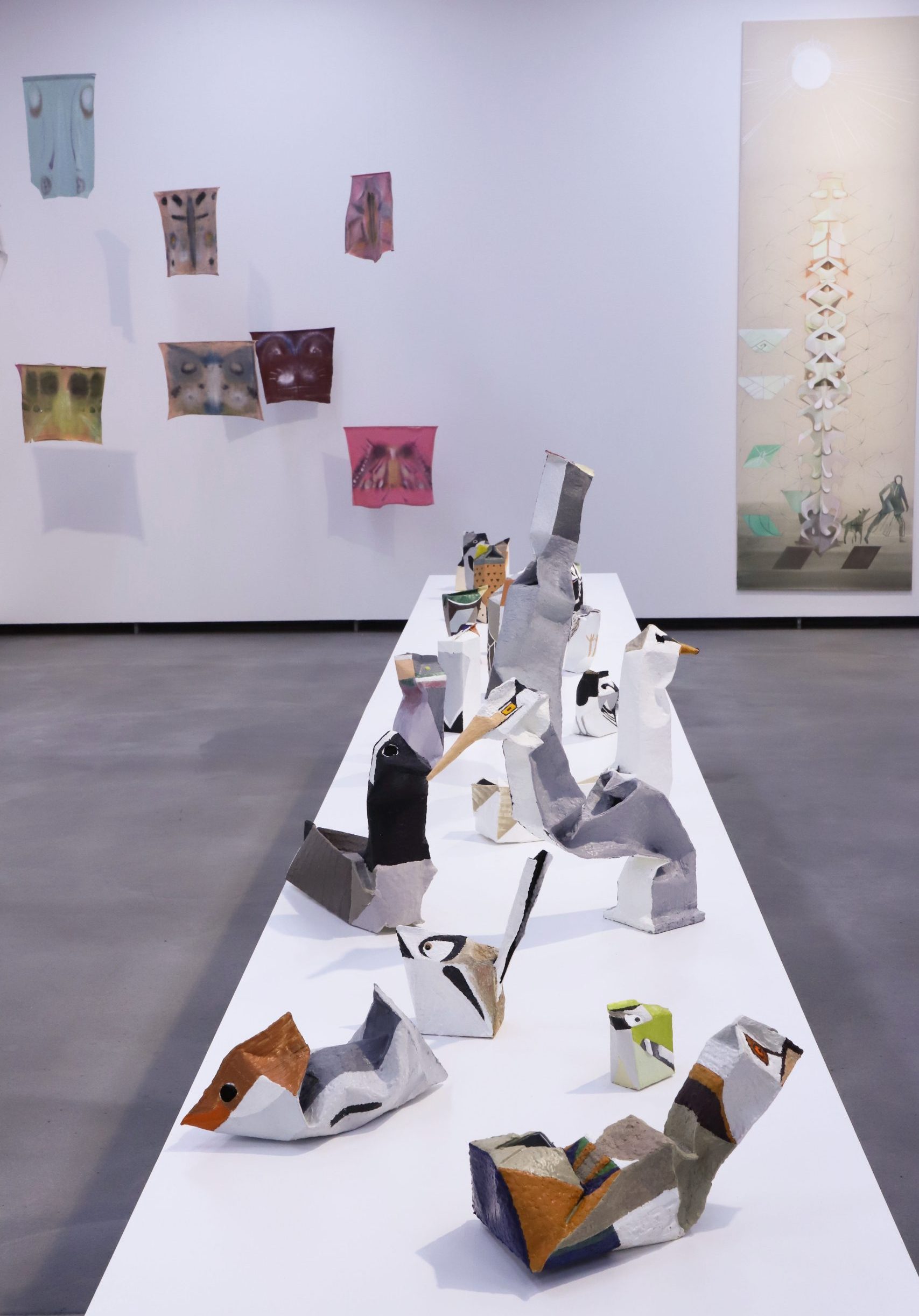
Grey heron and waterfowl kin 2026
Encaustic wax on cardboard
24 parts ranging from 4 x 10 x 9.5 cm to 20 x 10 x 63 cm
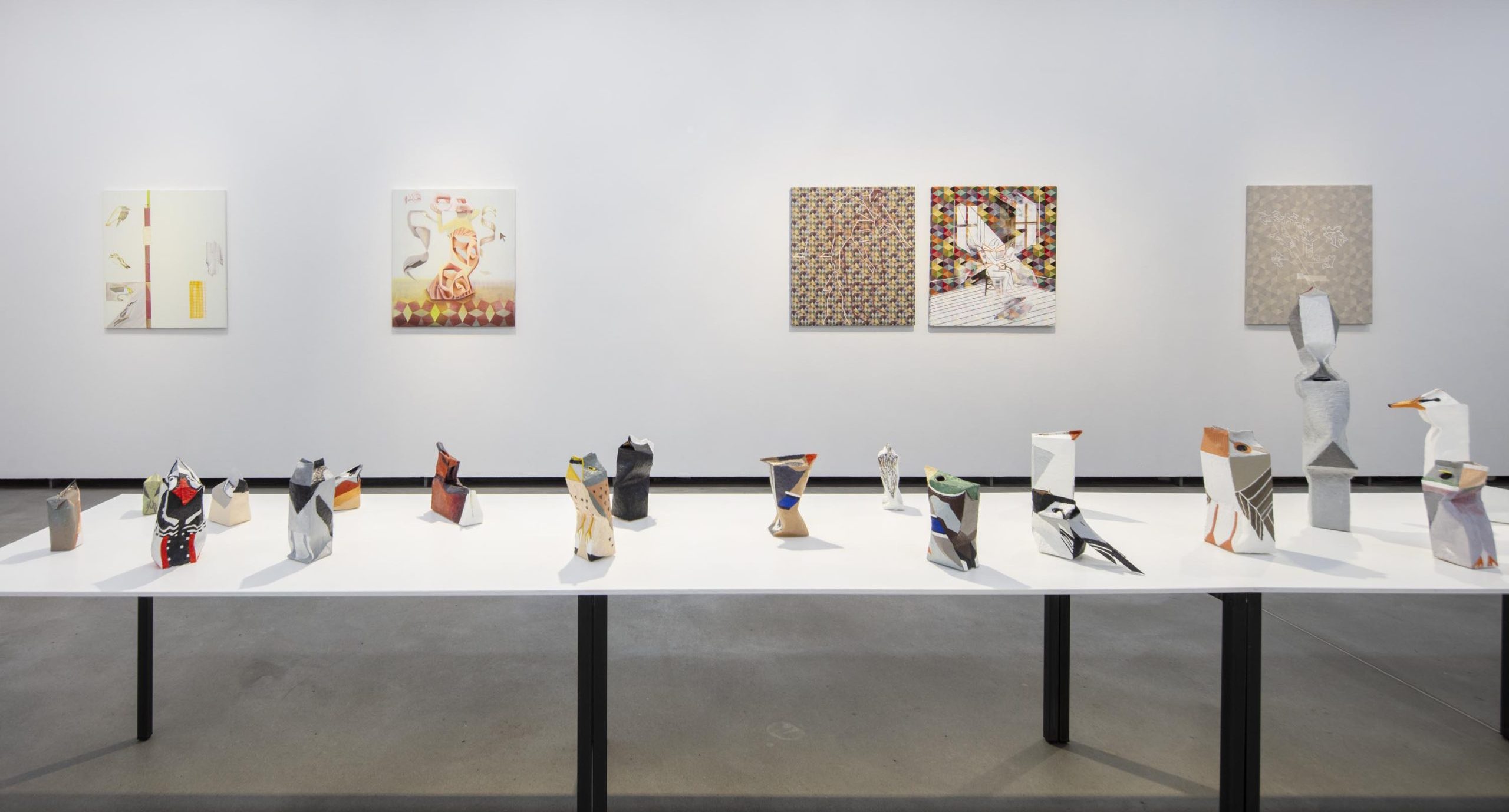
Grey heron and waterfowl kin 2026
Encaustic wax on cardboard
24 parts ranging from 4 x 10 x 9.5 cm to 20 x 10 x 63 cm
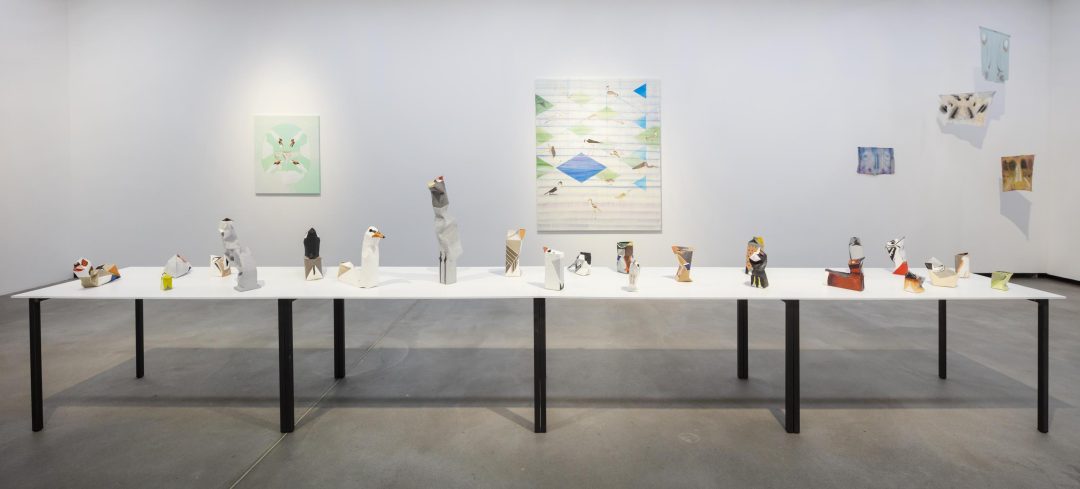
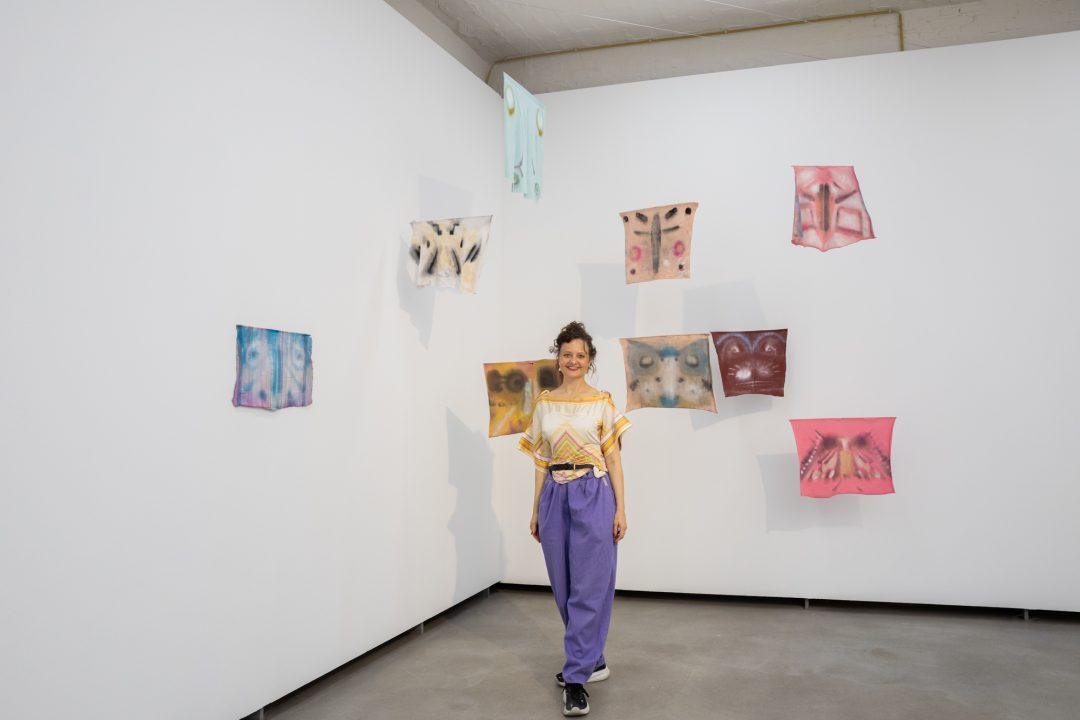
The installation Collect, Collect! Gather (2026) recalls the mission that Amalie Dietrich was tasked with when she travelled to Australia. Like mythical death masks, the monotypes reflect the processes of selection and appropriation involved: from a collection of over fifty textile works, the artist has selected only the most aesthetically pleasing examples. This makes it clear that the work of the European naturalist in Australia was one of continual taking: first taking a life, then taking it to Europe. The dozens of catalogued and preserved birds, flowers and butterflies that Madeleine Kelly isolates in her work can be found today in German museums.
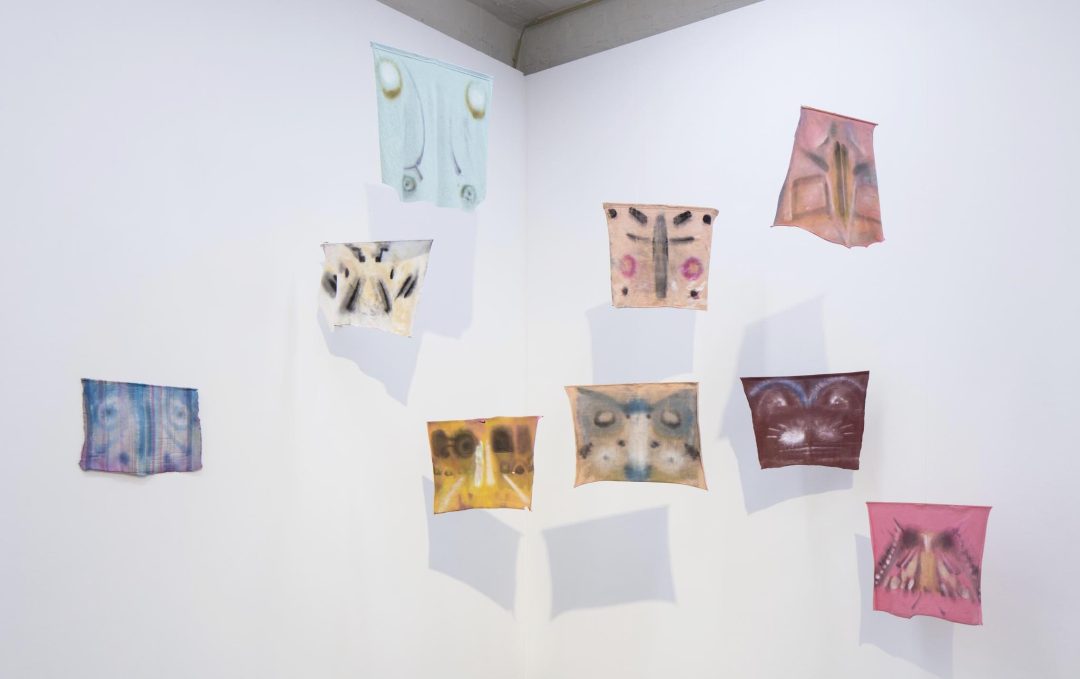
Collect, collect! Gather 2026 Binder and pigment on textile 9 parts, approximately 50 x 60 cm each 250 x 320 x 350 cm
The artist systematically explores Amalie Dietrich’s collections and life, approaching them as if she were a naturalist herself, and Amalie Dietrich her object of study. It could also be Madeleine Kelly herself in conversation with swans of light in The Naturalist’s Gaze (2026).
But where appraisal and classification once took place, the artist now refuses to draw any definitive conclusions.Instead, her works use transformation and realignment to complement an aesthetic level of speculation and ambivalence that breaks up the unyielding legacy of colonial order – a reversal that successfully exposes what is apparently objective and opens up endless possibilities for reinterpretation.
Text: Philine Pahnke
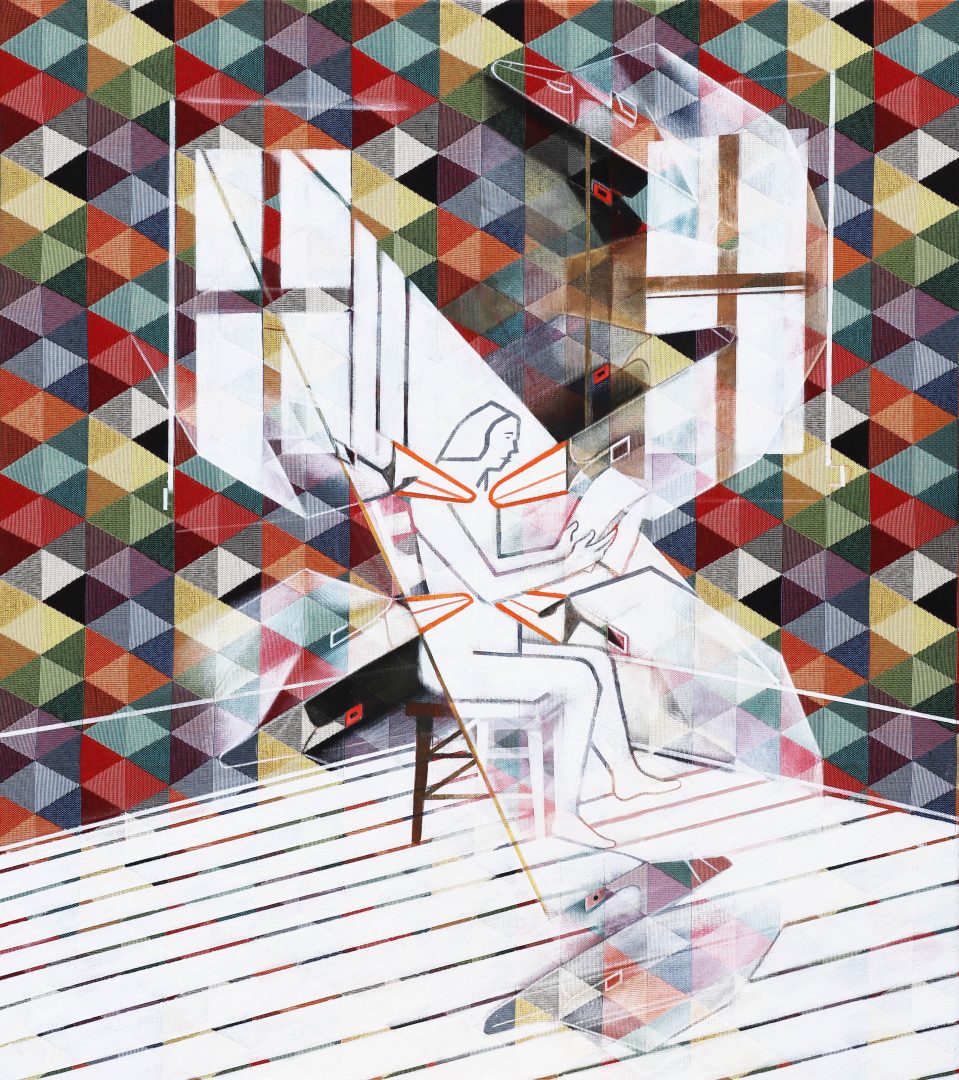
The Naturalist’s Gaze 2026
Acrylic on cotton
90 cm x 80 cm
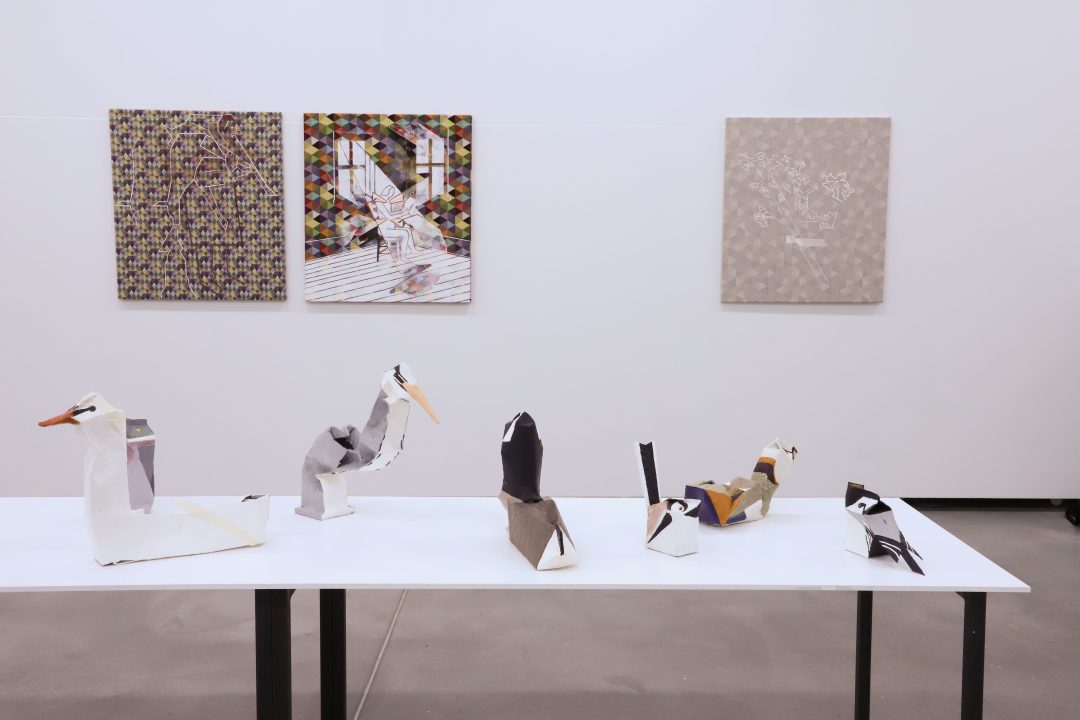
Installation view of works by Madeleine Kelly, on display as part of ‘The First Killing of a Butterfly’ exhibition at the Künstlerhaus Bethanien
12.06.2026 – 09.08.2026
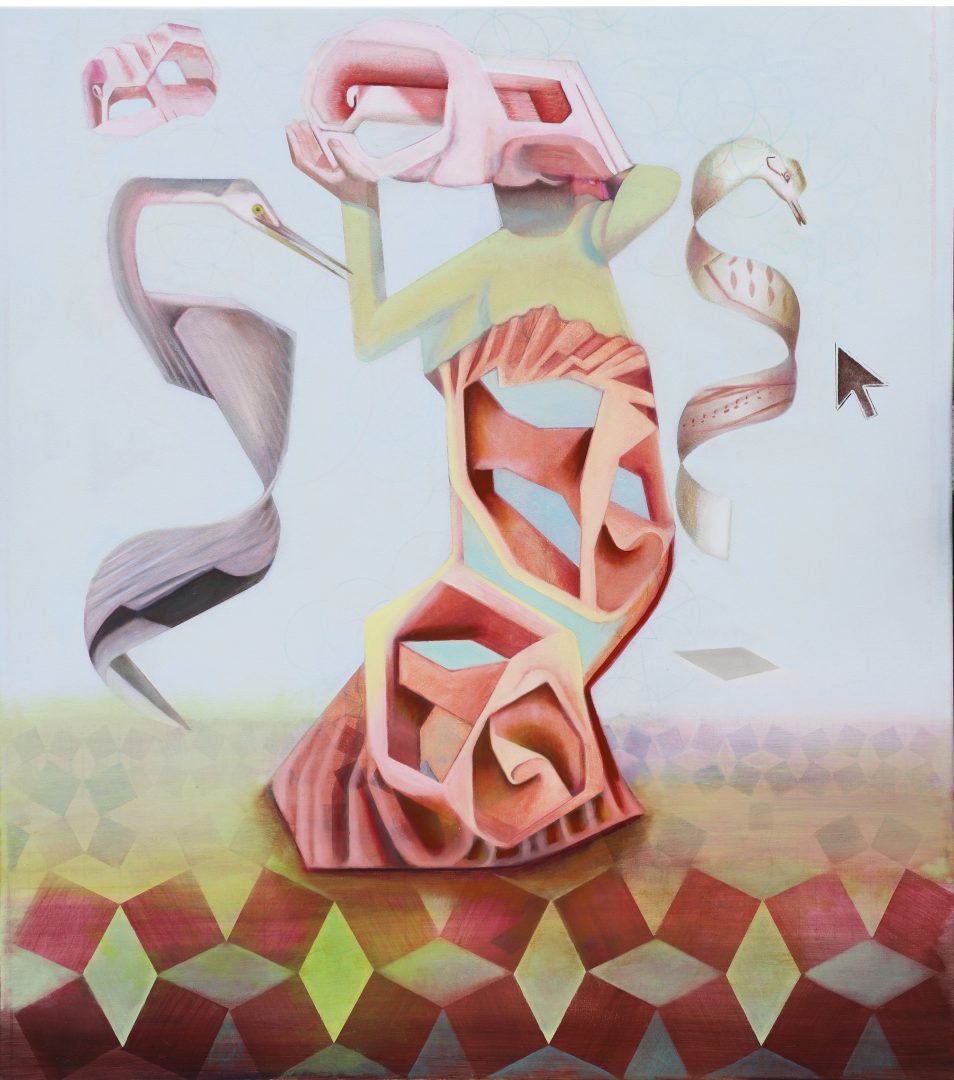
Spiral Notation 2026
Acrylic and oil on polyester
90 x 80 cm
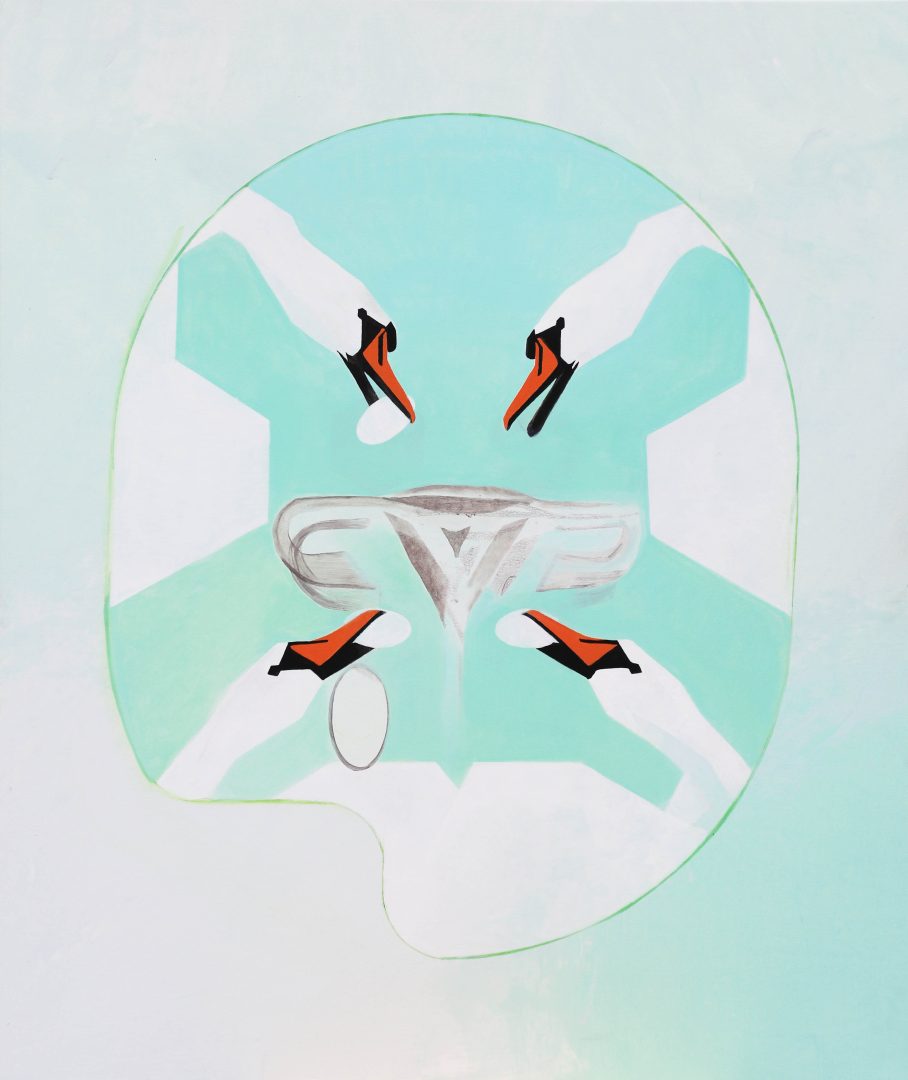
Full of Objects from You 2026
Acrylic on polyester
95 x 80 cm
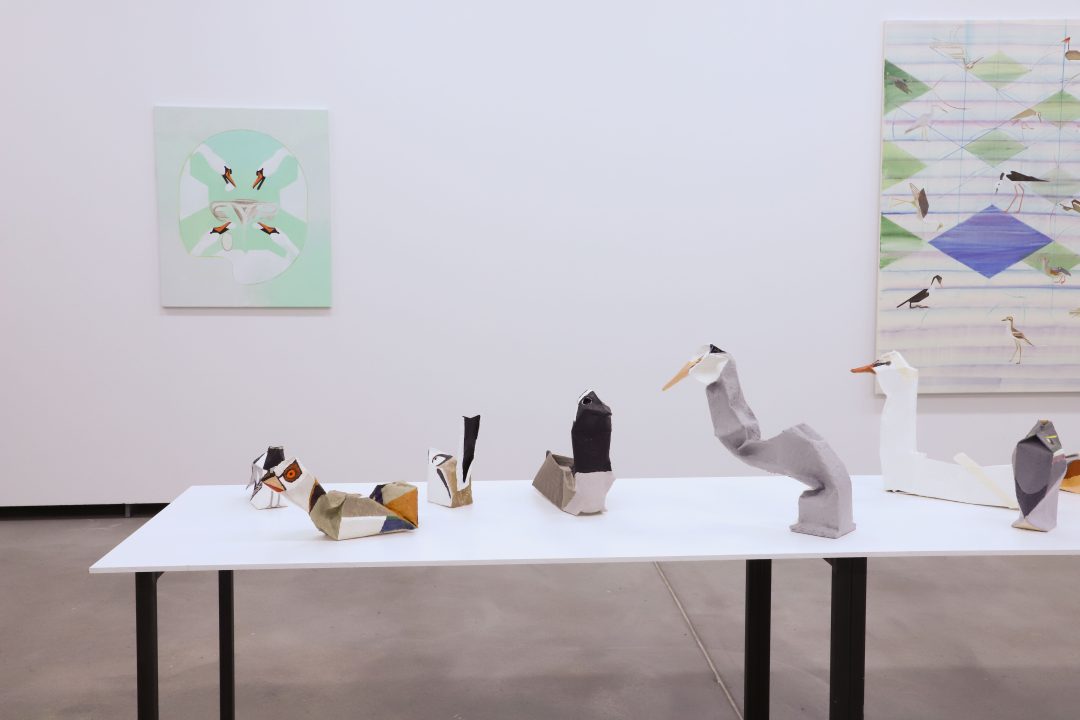
Installation view of works by Madeleine Kelly, on display as part of ‘The First Killing of a Butterfly’ exhibition at the Künstlerhaus Bethanien
12.06.2026 – 09.08.2026
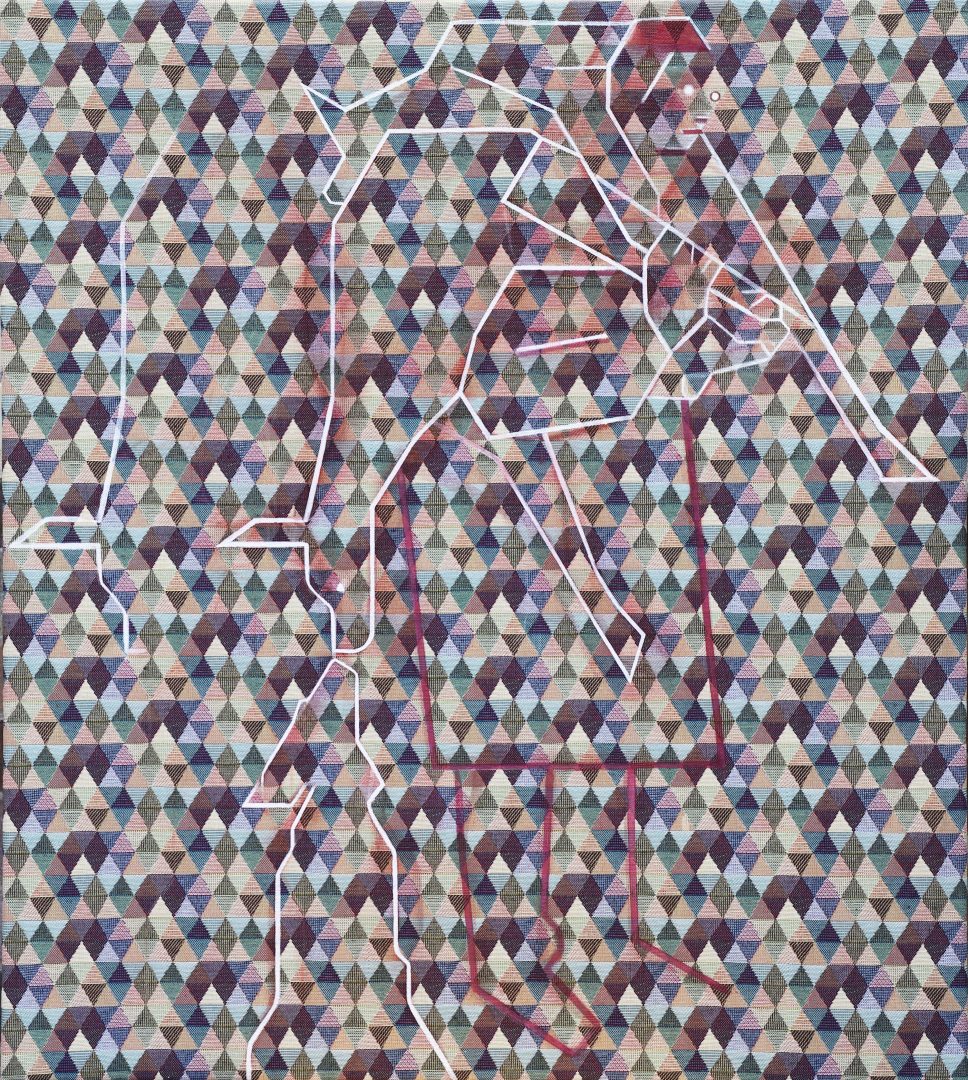
Linking Chain (after Cartier-Bresson) 2026
Acrylic on cotton
90 cm x 80 cm
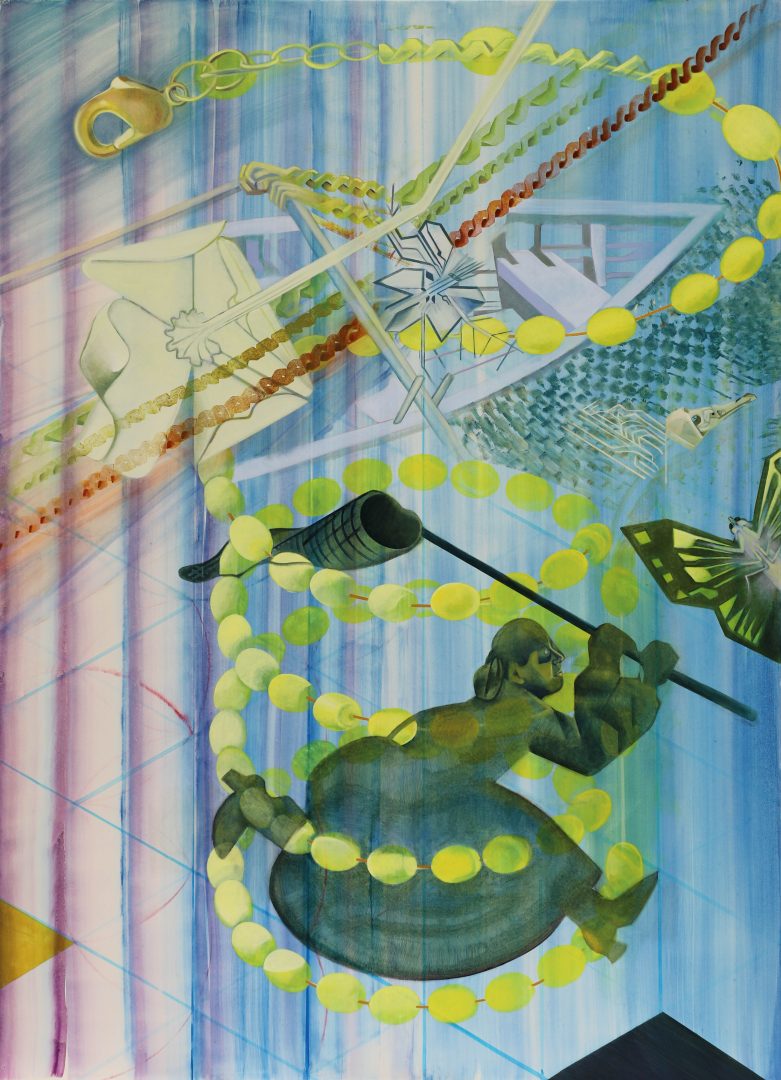
The Lies 2026
Pigment, binder, acrylic and oil on polyester
150 x 110 cm
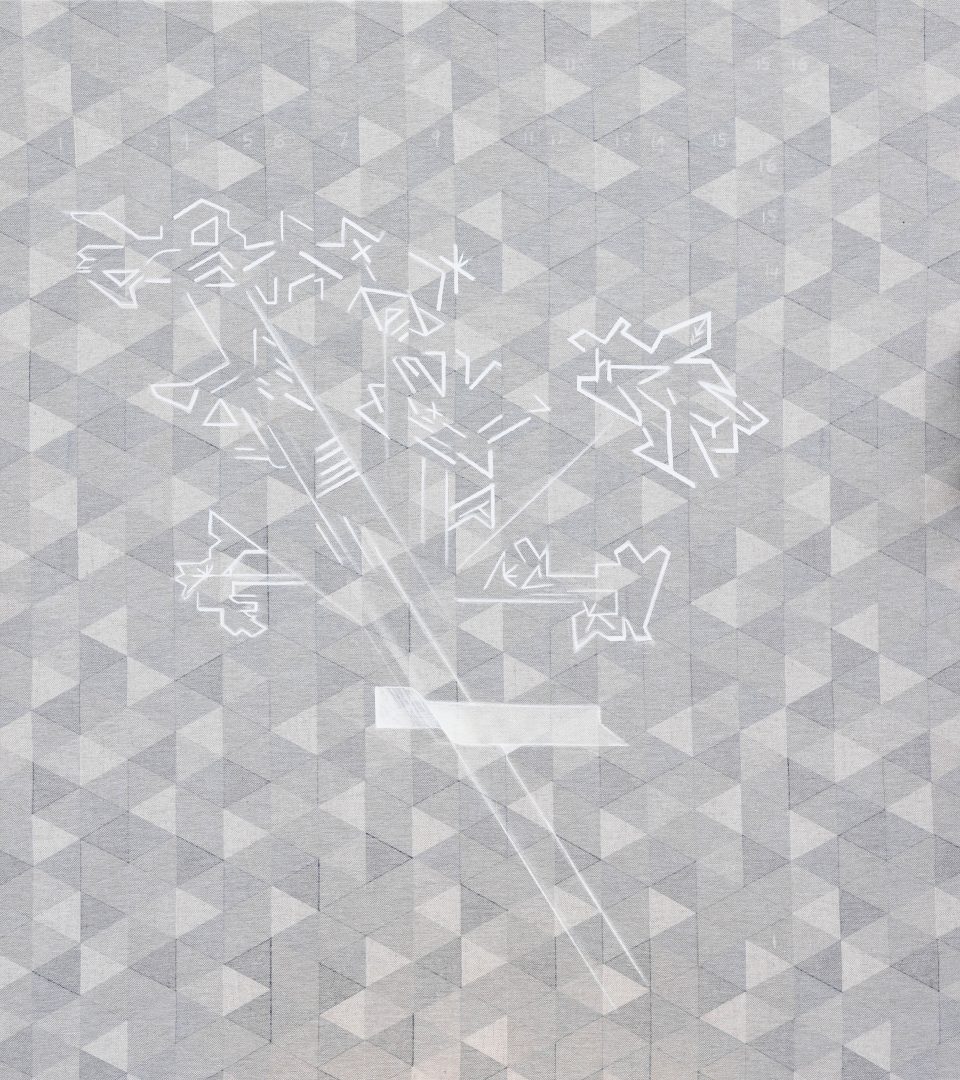
Sedges have Edges (Cyperus haspan dietrichiae) 2026
Acrylic on cotton
90 x 80 cm

Photographer: Galya Feierman
Photographer: Galya Feierman
Photographer: Galya Feierman
Photographer: Galya Feierman
Photographer: Galya Feierman
Photographer: Galya Feierman
Photographer: Galya Feierman