


The Archibald Prize 2025, Art Gallery of NSW, with Diana Wood Conroy projects
Diana Wood Conroy is an artist and Emeritus Professor Visual Arts, at the University of Wollongong. I chose Diana because we share a love of geometry, colour, shape and pattern. She has created hundreds of beautifully woven tapestries and authored several books. She writes that ‘The Latin word textus (literally ‘thing woven’) is a word that links to tissue, to the fabric of life.’
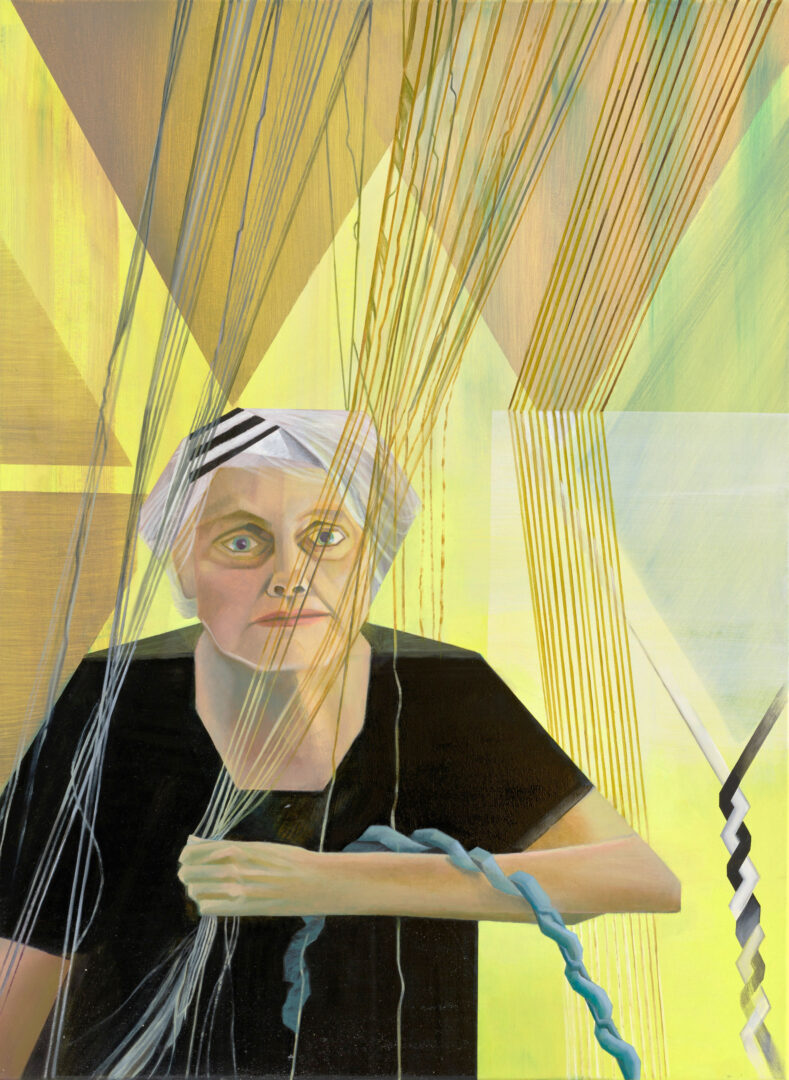
Archibald Prize 2025 finalist, Madeleine Kelly ‘Diana through threads’, oil and synthetic polymer paint on polyester, 96.8 x 71.2 cm © the artist, image © Art Gallery of New South Wales, Jenni Carter
Sitter: Diana Wood Conroy
In 2023 Diana invited me to be resident artist at the Sydney University Paphos Theatre Archaeological Project, an ancient theatre in Cyprus within the World Heritage-listed site of Paphos, surrounded by traces of Roman and Byzantine mosaics.
The portrait melds Diana’s obsession with numbers and patterns with a structured way of painting. I expose the method used to make the painting, with Diana’s arm resting on the foundation of the triangle fundamental to the geometry of the work.
The loom through which we see her is a field of lines that has the effect of creating a passage between the viewer and Diana’s creative power. Threads in-between Diana and the viewer facilitate a kind of entry into her big deep eyes.
I depict the intensity of her gaze through the crystalline. By magnifying the eyes, I make them stare back at the viewer, with an assertive, determined quality. There’s an asymmetry to the eyes which has a much more interesting effect than straight realism.
When I was painting Diana, I was thinking about several works: Gustave Courbet’s The man made mad with fear (The Desperate Man), 1843 – 4, Charley Toorop’s Self-portrait 1944-5, the observation in Lucian Freud’s early portraits, Max Beckman’s self-portraits, Howard Taylor’s Double Self Portrait 1959, Margaret Preston’s portraits and the staring intensity of 6 th century mosaics from the church of the saints Costa and Damian in Rome.
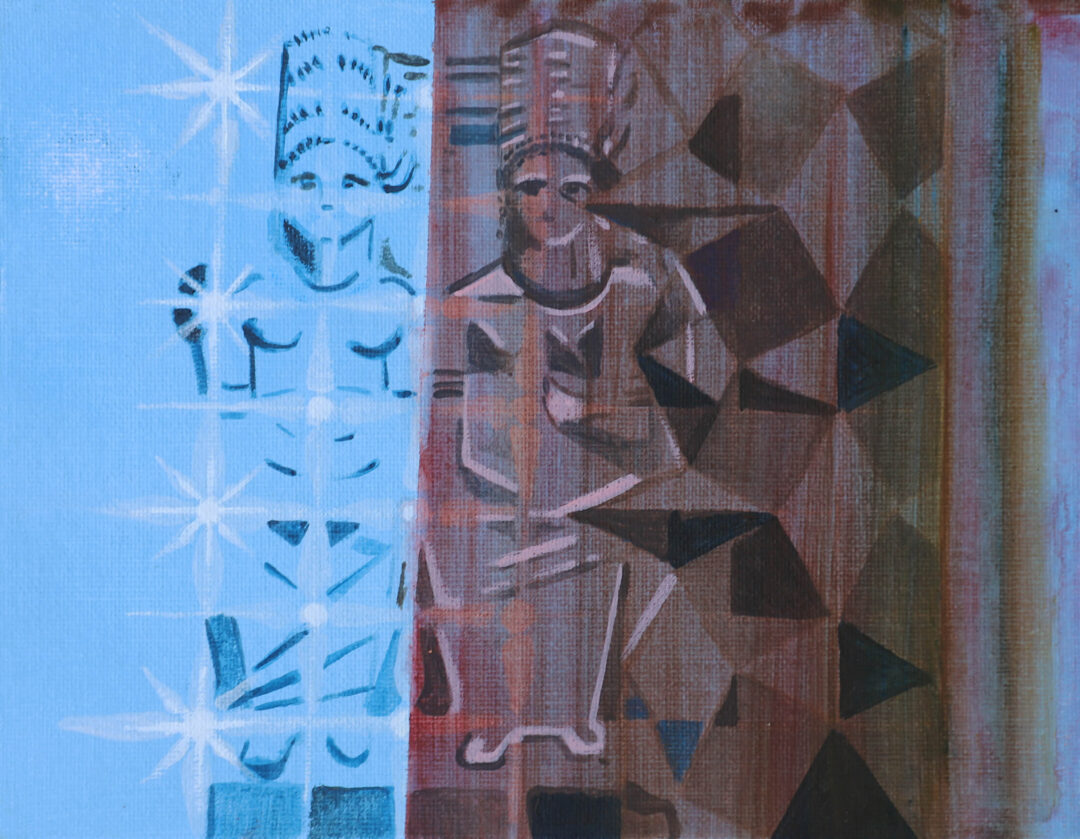
Madeleine Kelly Aphrodite Chthonia and Ourania with Stars 2023 Acrylic on canvas board 18 x 23 cm
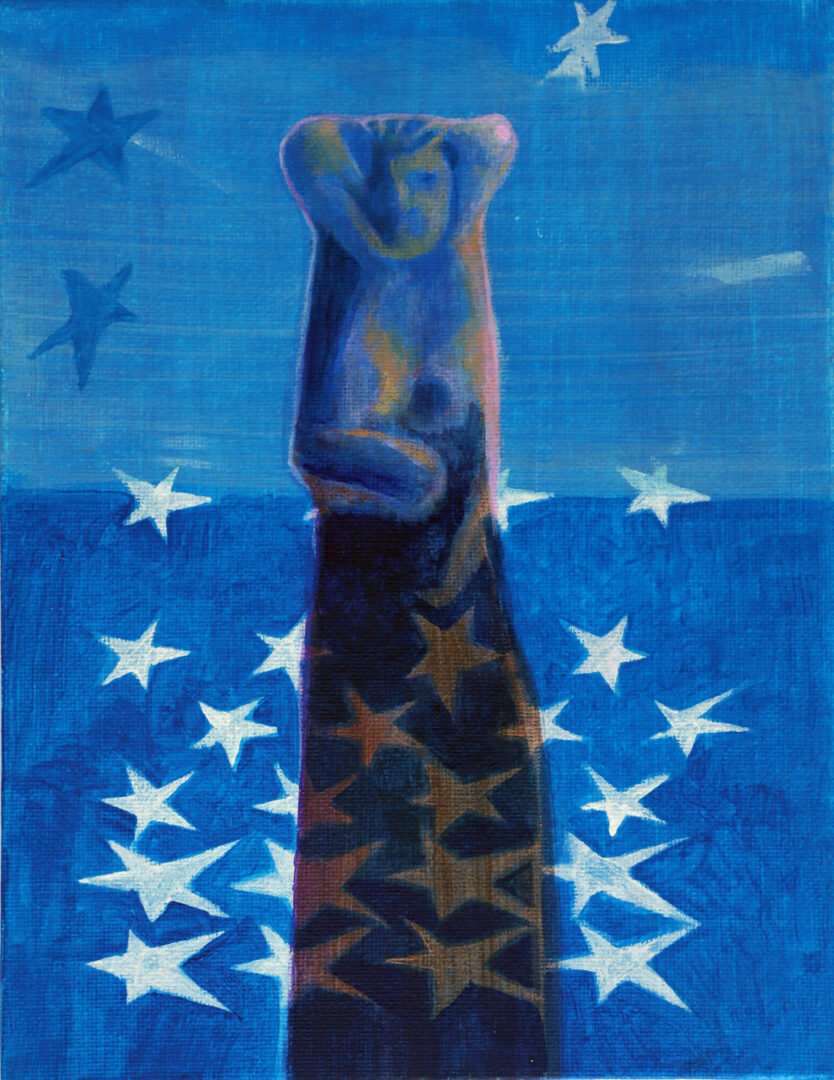
Madeleine Kelly Pregnant Goddess 2023 Oil and acrylic on canvas board 23 x 18 cm
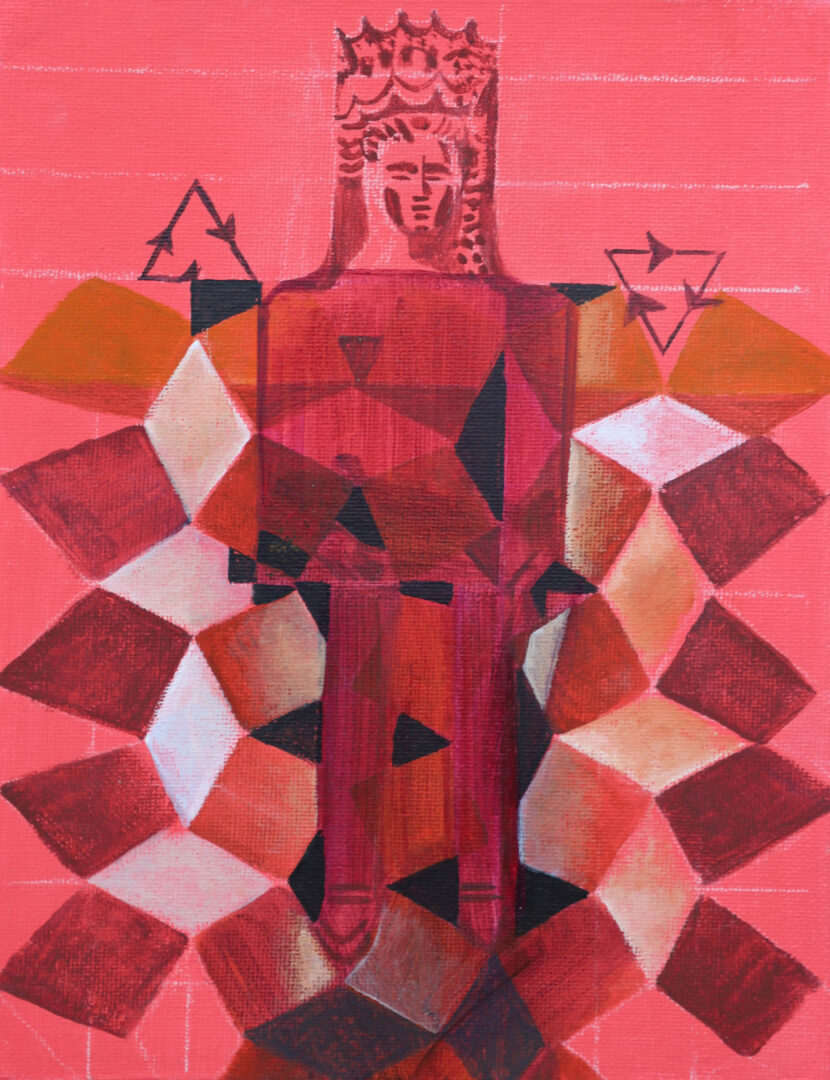
Madeleine Kelly Chthonic aphrodite 2023 Oil and acrylic on canvas board 23 x 18cm
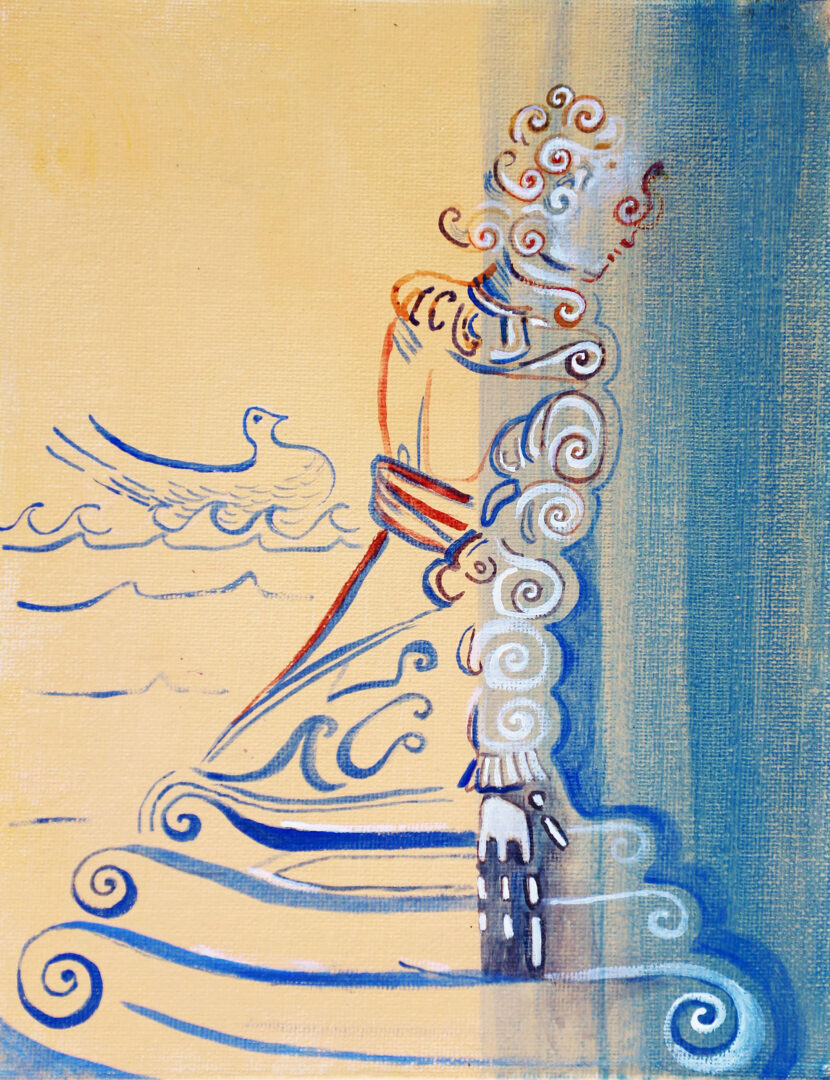
Madeleine Kelly Sperm Wave 2023 Oil and acrylic on canvas board 23 x 18 cm
My time as artist-in-residence at The University of Sydney Paphos Theatre Archaeological Project (PTAP) continues to inspire me. Diana, the Paphos Theatre Archaeological Project’s Artist-in-Residence since 1996, explained how the shapeshifting figure of Dionysius is embedded in the theatre, located alongside the Archaeological Park of Paphos. Here the intricate mosaic floors of four Roman villas (the houses of Dionysos, Theseus, Aion and Orpheus) framed my conceptual universe for three weeks. The mosaics offered incredible patterning and iconography. I appraised them alongside bursts of inflorescence, red poppies glowing in the sunset with flitting birds. Together, they spoke to the rhythms of the mosaics: their geometries inspired a new imaginative dimension to my work, building on previous research into the scintillating patterns in Ravenna, Italy, in 2022.
Byzantine art fuses pagan and Christian iconography through illusionism and geometry, reflecting its neo-platonic origins. I noted their remarkable formations, always within circular and gridded foundations, and put them in my paintings. For me, the mosaics represent the current ambiguity and complexity within the world of translation and communication. Aphrodite too, is an appropriate subject in a world of struggles against nature.
Ecologist Donna Harraway also writes about the Sym-chthonic – an earth that does not dither, it composes and recomposes, bridging the idea of the mineral underworld, mosaics, and environmental themes. For me, the mosaics represent the current ambiguity and complexity within the world of translation and communication. Aphrodite too is an appropriate subject in a world of struggles against nature.
The figure of Aphrodite is embedded in Paphos alongside The Archaeological Park of Paphos and its birds. Aphrodite, goddess of the underworld, offers incredible symbolism for ideas around the earth and ‘composting’ and the mosaic patterning and iconography of the intricate mosaic floors of four Roman villas continue to offer a geometric avenue to develop my practice.
Radio Interview
Art Gallery of NSW Website
The Archibald Prize 2025, Art Gallery of NSW, curated by Beatrice Gralton (10 May – 17 August)